Introducing Bectran Intelligence Lab — AI tools for credit, risk, and collections.
Explore the toolkit →%20copy%201.svg)

Data Ecosystem

Consumer Credit Reporting
Bureau data and cash flow intelligence, pulled into your credit review workflow.






Cash Flow Analysis
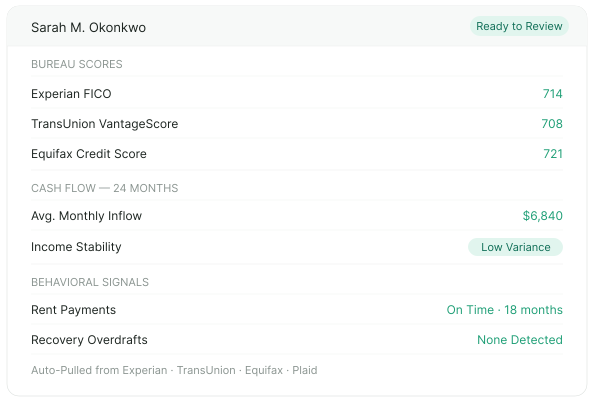
Up to 24 months of inflows, outflows, and transaction history surface income stability and account health in real time.
Continuous Updates
After decisioning, ongoing monitoring alerts the team to material financial behavior changes across the portfolio.

Auto-Pull Bureau Data
Reports pull via secure API from your preferred bureaus and populate directly into the applicant's review record.
Surface Behavioral Signals
Rent payments, BNPL activity, overdrafts, and large balance drops surface, triggering additional review.
Review faster without having to wait on manual data pulls. Bureau data and cash flow insights arrive pre-populated in the applicant record the moment a review begins, cutting the back-and-forth between systems.
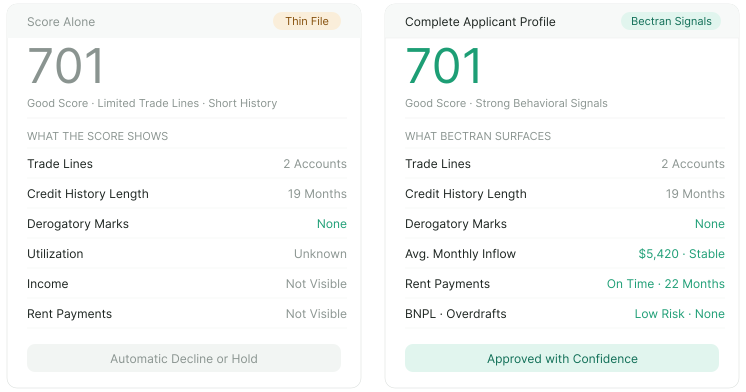
Give your team enough context to make a confident decision rather than defaulting to a conservative one. Rent payments, BNPL history, account balances, and spending patterns reveal what the credit score doesn't, so every applicant gets a fuller evaluation.
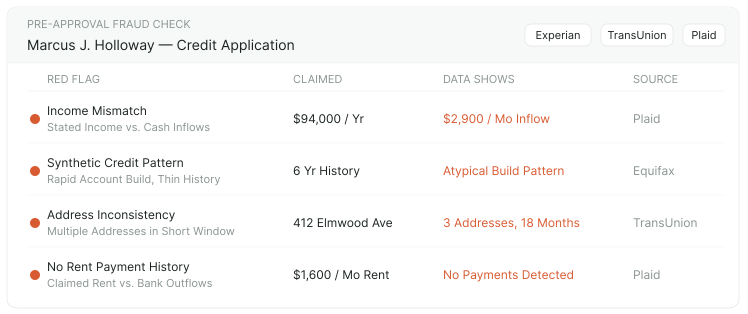
Cross-referencing bureau data with real-time financial behavior catches inconsistencies that a score alone won't surface. Identity red flags, synthetic profiles, and misrepresented financial positions show up earlier in the review, before a line of credit is opened on an account that was never who it claimed to be.
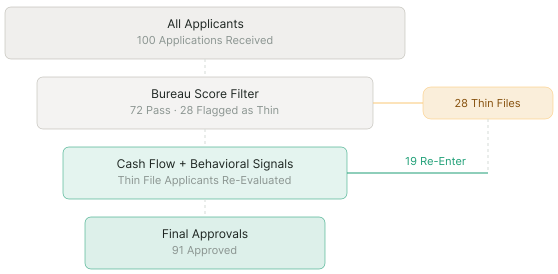
Applicants with thin files often get declined because traditional bureau data doesn't capture enough. Cash flow and behavioral data fill that gap, giving the credit team a more complete picture of actual financial health and enabling the approval of customers who otherwise would have gone to a competitor.
Continuously monitor surface-level material changes in financial behavior across the existing portfolio, including large balance drops, new overdraft patterns, or shifts in payment behavior that precede a default. Make adjustments and flag accounts before a problem reaches collections, not after.
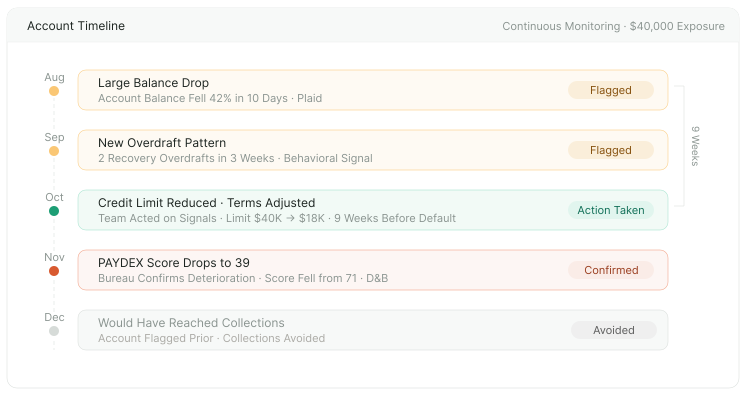
A credit score is a snapshot. It doesn't show what's happened in the last 90 days, how an applicant manages cash between reporting cycles, or whether their behavior has changed since the last bureau update. When credit decisions are made on incomplete data, the consequences show up later: write-offs on accounts that looked clean at onboarding, and missed opportunities with applicants who were creditworthy but couldn't prove it through a bureau report alone.

A local supplier evaluating sole proprietors and small businesses with limited credit histories was approving too conservatively, declining applicants who may have qualified while approving some who didn't. After integrating consumer credit reporting with bureau data and cash flow insights, the team validated identity, uncovered consistent income patterns, and spotted red flags earlier in the process. Credit application turnaround time dropped 40%, more qualified applicants were approved, and three high-risk partnerships were avoided.


A regional lender consistently declining thin-file applicants due to insufficient traditional bureau data was losing qualified customers to competitors. After adding cash flow and behavioral signal data to the review process, the team developed a more complete picture of applicant financial health. Thin-file approvals increased 25% within the first two quarters with no corresponding increase in default rates.